


You may also like
-

Pteris rotundifolia Poster
Anna Atkins · 1850 · Leuchtender Cyanotypie-Kunstdruck eines Farnwedels mit luftiger, spitzenartiger Detailzeichnung und ruhiger Ausstrahlung
Poster ab €9 · Gerahmt ab €16
-

Lastrea dilatata Poster
Anna Atkins · 1850 · Feinzeichnender Cyanotypie-Kunstdruck einer Lastrea dilatata mit luftigen Wedeln vor sattblauem Fond, detailreiche botanische Darstellung
Poster ab €9 · Gerahmt ab €16
-

Davallia aeuleata Poster
Anna Atkins · 1850 · Ätherische Cyanotypie eines Farnblatts in leuchtendem Weiß vor tiefblauem Grund
Poster ab €9 · Gerahmt ab €16
-

Lastrea Spinulosa Poster
Anna Atkins · 1850 · Detaillierter botanischer Farn-Cyanotypie-Kunstdruck mit leuchtend weißen Wedeln auf tiefem Preußischblau
Poster ab €9 · Gerahmt ab €16


-

'Sehr schöne Poster. Die Qualität ist fantastisch und wir haben sie sehr schnell bekommen!'
-

'Ein Laden, den man unbedingt besuchen sollte. Riesige Auswahl an Postern. Wir haben dort mehr als eine Stunde verbracht!'
-

'Perfekt, wenn man ein Geschenk sucht. Die Preise sind wirklich gut, und man kann es direkt vor Ort rahmen und verpacken lassen.'
Über den Künstler
Anna Atkins war eine britische Botanikerin und frühe Fotografie-Pionierin, deren Werk an der Schnittstelle von Wissenschaft und Kunst im 19. Jahrhundert steht. Sie experimentierte früh mit fotografischen Verfahren und entwickelte die Cyanotypie zu einem verlässlichen Mittel, um botanische Exemplare mit außergewöhnlicher Genauigkeit zu dokumentieren. Atkins verkehrte in Kreisen von Naturforschern und Sammlern, und ihre Cyanotypien dienten als wertvolle Referenzwerke für die Erforschung und Klassifikation von Pflanzen.
Ihr Beitrag wird heute sowohl als wissenschaftliche Leistung als auch als künstlerische Wegbereiterin gewürdigt; ihre Arbeiten gelten als Meilensteine in der Geschichte der Fotografie und der botanischen Illustration.
Das Kunstwerk
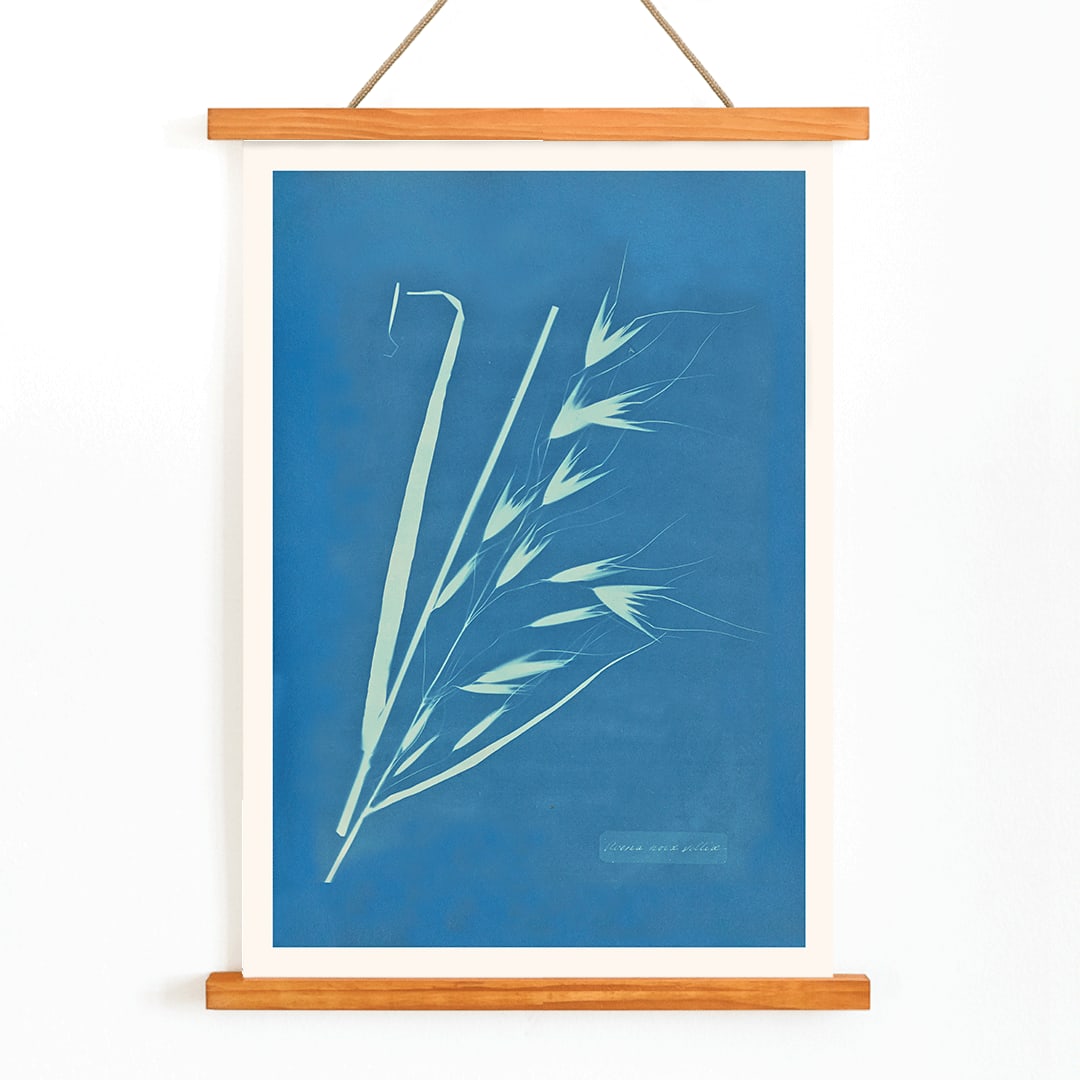
Uvena Novae Villiae entstand in einer Zeit, in der Naturforscher danach strebten, botanisches Wissen durch präzise visuelle Aufzeichnungen zu verbreiten. Atkins’ direkte Kontaktbelichtung ermöglichte es, die exakte Gestalt jedes Exemplars festzuhalten, wodurch ihre Tafeln für Forscher und Sammler gleichermaßen von Wert waren. Der lateinische Titel spiegelt den wissenschaftlichen Anspruch und die Tradition botanischer Katalogisierung wider.
Solche Tafeln zirkulierten einst in wissenschaftlichen Kreisen und unter Naturfreunden und fungierten gleichermaßen als Dokument und visuelle Kultur. Heute steht dieses Blatt als Zeugnis jener Epoche des Entdeckens und der anhaltenden Faszination für botanische Studien und verbindet sich thematisch mit wissenschaftlicher Wandkunst und botanischen Kunstdrucken.
Stil und Merkmale
Die Cyanotypie zeigt eine filigrane, verzweigende Tang- oder Algen-Silhouette, die in hellen Abstufungen vor einem satten, tiefblauen Grund erscheint. Das Exemplar ist sorgfältig arrangiert, um seine feine Struktur zu offenbaren; die Konturen sind scharf, mit dezenten Tonverläufen dort, wo dünnere Partien mehr Licht durchließen. Die Komposition wirkt ausgewogen und unaufgeregt und betont die organische Schönheit der Pflanze.
Handschriftliche Notizen am unteren Rand verleihen dem Blatt einen archivischen Charakter und unterstreichen dessen Ursprung als wissenschaftliche Tafel. Die Gesamtstimmung ist ruhig und kontemplativ, ein verfeinertes Beispiel früher fotografischer Kunst, das sich harmonisch zu Vintage-Fotodrucken in einer kuratierten Sammlung fügt.
In der Raumgestaltung
Klassische Blau-Weiß-Cyanotypien wie diese verleihen Räumen eine Atmosphäre von Ruhe und Raffinesse, sei es in einem minimalistischen Schlafzimmer, einem stillen Flur oder einem Arbeitszimmer. Das tiefe Blau wirkt als dezenter Akzent, besonders in Kombination mit hellem Holz, weißen Wänden oder Leinentextilien.
Für ein stimmiges Gesamtbild empfiehlt sich eine Rahmung in mattem Schwarz oder hellem Eichenholz und das Aufgreifen der Palette in Keramik oder Textilien. Dieses Werk ist eine elegante Wahl für alle, die eine blau dominierte Galerie mit archivarisch inspirierten Drucken zusammenstellen möchten, etwa neben blauer Wandkunst und weiteren klassischen Stücken.