




-

"Very nice Posters. The quality is amazing and we received it very quickly !"
-

"A shop to visit absolutely. Huge selection of posters. We spent more than an hour there !"
-

"Perfect to find gift. Price are very good. An they can frame and pack it on site"
About the Artist
The U.S. Information Agency was a federal body established to promote American culture and values abroad during the Cold War era. Through posters, exhibitions, and media, the agency sought to communicate the vibrancy of American life and the arts to international audiences. Its graphic projects, including this work, were typically the result of collaborative design teams rather than individual artists, reflecting a unified, public-oriented visual language. USIA's legacy endures in the realm of vintage advertising posters that transformed cultural events into iconic visual statements.
The agency’s approach emphasized clarity, accessibility, and the power of the arts as a diplomatic tool, positioning music and performance as universal connectors.
The Artwork
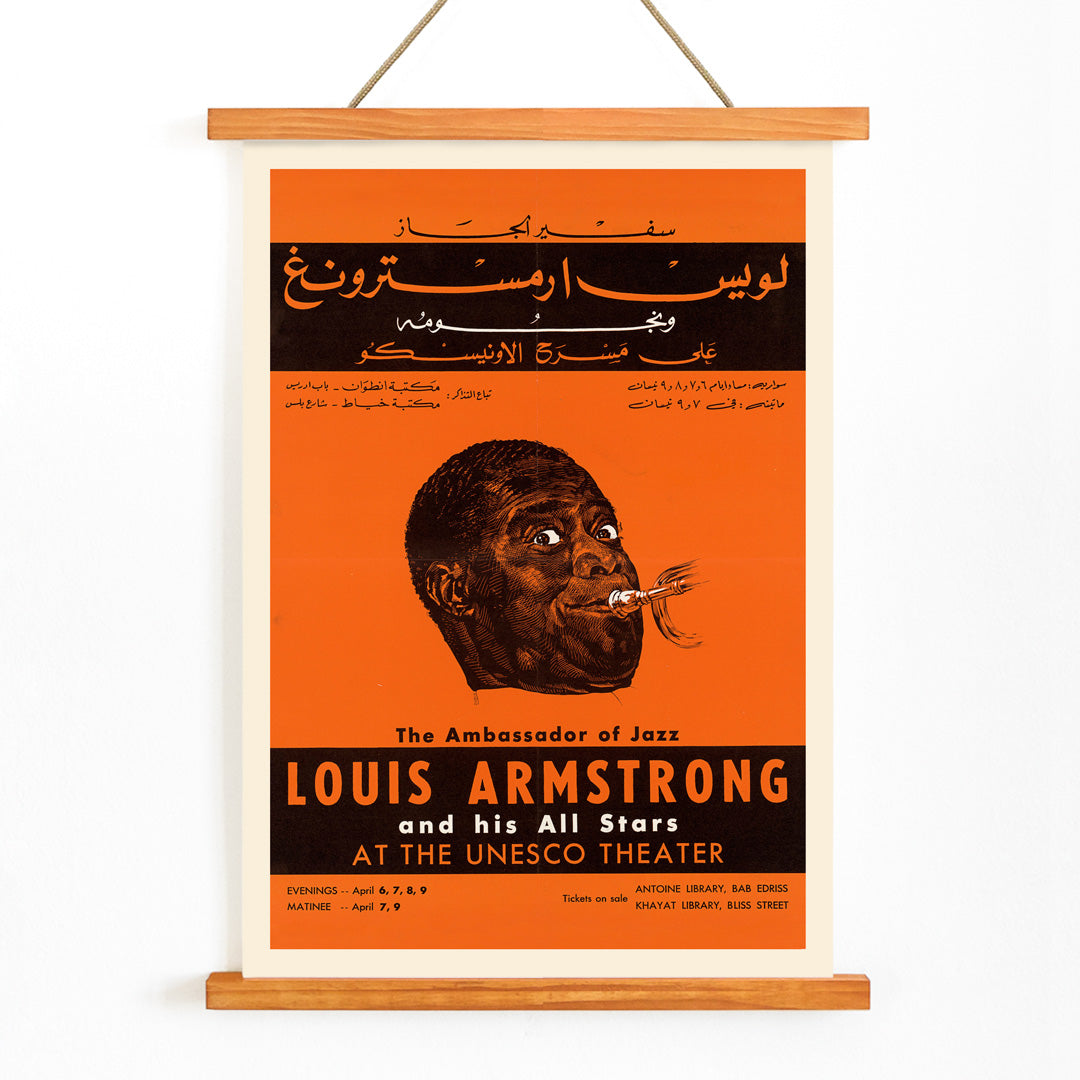
This poster was produced to announce a special appearance by Louis Armstrong, one of jazz’s most influential figures. In the context of the late 1950s, Armstrong’s tours were not only musical events but also acts of cultural diplomacy, representing American creativity on the world stage. The USIA recognized jazz as a symbol of freedom and innovation, using Armstrong’s image to foster goodwill and cross-cultural understanding during a time of global tension.
The poster serves as a historical artifact from a period when jazz was celebrated as both a national treasure and an international language, capturing the excitement of a live performance and the broader significance of music in public life.
Style & Characteristics
The design is strikingly bold, using a limited palette dominated by vivid orange, deep black, and crisp white. Armstrong and his trumpet are rendered in simplified, graphic forms, with strong contours and minimal detail that create instant visual impact. The composition is dynamic and direct, emphasizing movement and energy, hallmarks of mid-century American poster art. The use of high contrast and flat color fields ensures legibility and draws the viewer’s eye immediately to the central figure.
This visual language aligns with the era’s preference for clarity and modernism, making the poster a standout example for those interested in music wall art or bold black and white prints accented with color.
In Interior Design
This vintage jazz poster brings a lively, sophisticated touch to interiors such as living rooms, music spaces, or creative offices. The orange highlights pair beautifully with warm woods, brass accents, and neutral backdrops, while the black-and-white structure keeps the look crisp and modern. It integrates seamlessly into gallery walls alongside other graphic or music-themed pieces, and complements both minimalist and mid-century decor styles. For jazz enthusiasts or lovers of American design, it offers a distinctive and timeless visual statement.