


You may also like
-
Fotografisches Kamerapatent Poster
G. Fassin · 1938 · Präziser Kamerapatent-Druck mit nummerierten Diagrammen und feiner klarer schwarzer Linienführung
Poster ab €9 · Gerahmt ab €16
Normaler Preis Von €6,00Normaler Preis -
Kamera-Patent Poster
T. H. Blair · 1887 · Detaillierter Vintage-Kamerapatentdruck mit klaren Diagrammen und nummerierten Bauteilen
Poster ab €9 · Gerahmt ab €16
Normaler Preis Von €6,00Normaler Preis -
Mikroskop-Patent Poster
E. Bausch · 1899 · Präziser Mikroskop-Patentdruck mit klarer, beschrifteter Linienführung auf warmem, beigefarbigem Papier
Poster ab €9 · Gerahmt ab €16
Normaler Preis Von €6,00Normaler Preis -
Kaffeemaschinen-Patent Poster
F.E. Wolcott · 1934 · technischer Kaffeemaschinen-Vintage-Druck mit klarer Blaupausen-Linienführung auf feinem warmem Beigeton
Poster ab €9 · Gerahmt ab €16
Normaler Preis Von €6,00Normaler Preis


-

"Very nice Posters. The quality is amazing and we received it very quickly !"
-

"A shop to visit absolutely. Huge selection of posters. We spent more than an hour there !"
-

"Perfect to find gift. Price are very good. An they can frame and pack it on site"
Über den Künstler
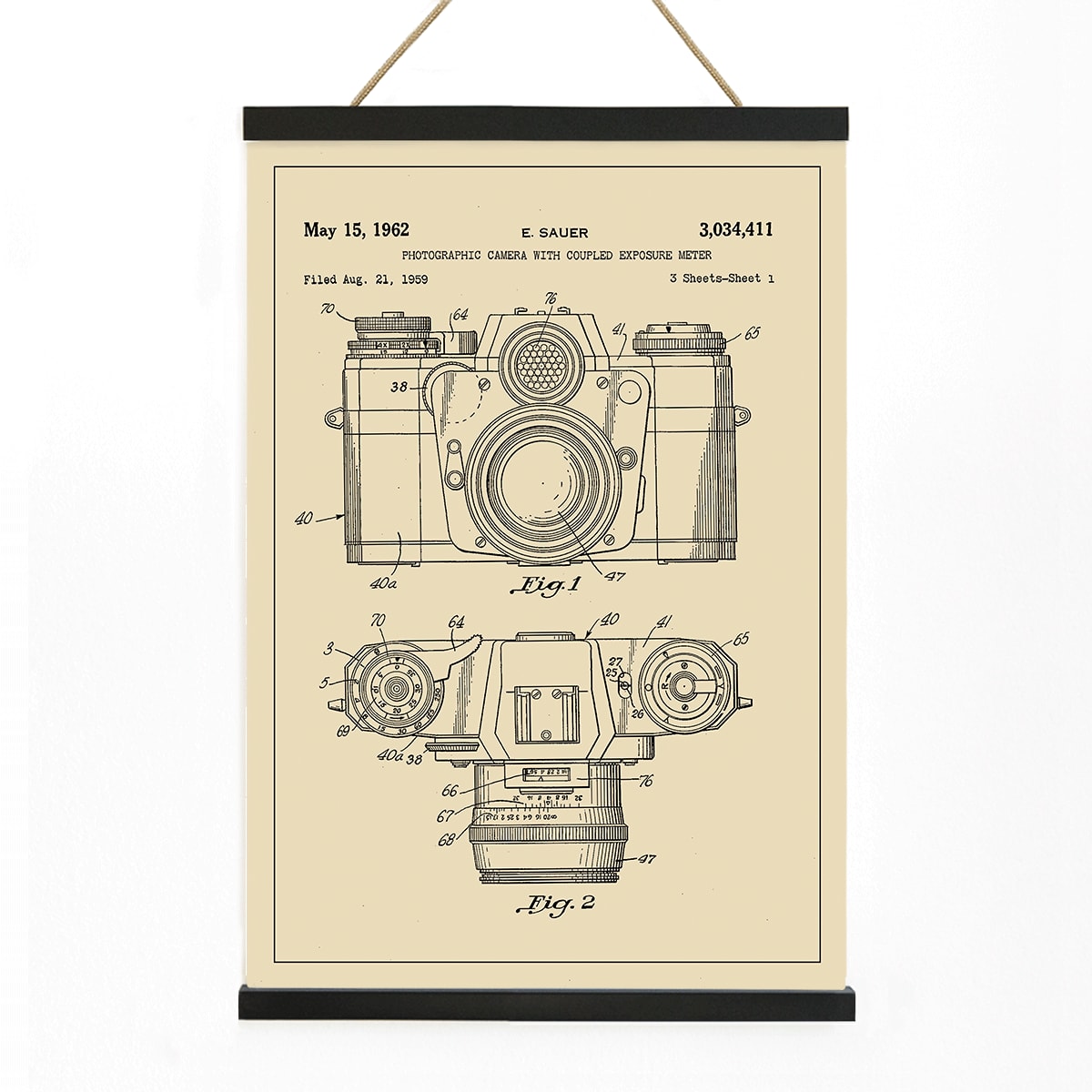
E. Sauer wird auf diesem Patentblatt von 1935 sowohl als Erfinder wie auch als Zeichner genannt und arbeitete innerhalb der strengen Konventionen technischer Dokumentation. Patentskizzen bewegen sich an der Schnittstelle von Ingenieurwesen und Grafikdesign, wo Klarheit und Genauigkeit oberste Priorität haben. Sauers disziplinierter Ansatz spiegelt die Epoche des technischen Fortschritts wider und macht dieses Blatt zu einem faszinierenden Zeitzeugnis für alle, die sich für die Geschichte der Fotografie und des Designs interessieren.
Für weitere Arbeiten, die Kultur und Werkzeuge des Bildmachens beleuchten, besuchen Sie unsere Fotoposter und Fotodrucke Sammlung
Das Kunstwerk
Dieser Vintage-Patentdruck dokumentiert ein Kameradesign, das rechtlichen Schutz und technische Kommunikation in einer prägnanten Phase der Fotogeschichte sichern sollte. In den 1930er Jahren, als Fotografie zunehmend zugänglich und tragbar wurde, suchten Erfinder wie Sauer nach Lösungen zur verbesserten Handhabung und Belichtungsgenauigkeit. Die Integration eines gekoppelten Belichtungsmessers im Patent unterstreicht den Drang nach Präzision und Bedienkomfort, der die Kameratechnik dieser Zeit prägte.
Über den technischen Zweck hinaus evoziert der Druck den Geist des Erfindens und die greifbare Atmosphäre von Werkstatt und Dunkelkammer und fängt einen Moment ein, in dem mechanische Raffinesse bestimmte, wie Erinnerungen festgehalten wurden.
Stil und Merkmale
Das Werk besticht durch scharfe schwarze Linien auf warmem Beigeton und ist als technische Platte mit mehreren schematischen Ansichten und detaillierten Anmerkungen aufgebaut. Die Komposition zeichnet sich durch klare Konturen, wohlproportionierte Raumaufteilung und zurückhaltende Typografie aus, was dem Druck eine geordnete, ruhige Eleganz verleiht. Jedes Element wirkt zweckmäßig, sodass trotz Minimalismus eine reiche Detaildichte entsteht, die bei genauer Betrachtung belohnt.
Die Stimmung ist sachlich und modern, weshalb das Blatt besonders bei reduzierten Interieurs gut zur Geltung kommt. Wenn Sie diesen Bauplanstil schätzen, finden Sie Inspiration in unseren Science Prints und Bauhaus Postern
In der Raumgestaltung
Dieses Kamera-Patentposter harmoniert mit schwarzen Rahmungen, matten Metallen und Naturhölzern und spiegelt seine technische Präzision wider. Es passt hervorragend in kreative Arbeitsräume, Galeriewände im Flur oder Wohnbereiche mit Büchern, Vintage-Kameras oder industriellen Akzenten. Die neutrale Farbgebung erleichtert die Einbindung in skandinavische, industrielle oder moderne Einrichtungsstile.
Für ein stimmiges Ensemble kombinieren Sie es mit weiteren beigen oder monochromen Wandbildern, damit die feinen Konstruktionslinien als dezenter Blickfang dienen, der zu wiederholtem Betrachten einlädt