


You may also like
-
Rüschen und Schnörkel Orgueil Poster
George Barbier · 1925 · Art-Deco-Poster mit glamouröser Dame in kräftigen Gelb- und Schwarztönen
Poster ab €9 · Gerahmt ab €16
Normaler Preis Von €6,00Normaler Preis -
Chez la Marchande de Pavots Poster
George Barbier · 1920 · Art Deco Poster mit elegant liegenden Figuren und einem blauen Drachen in kräftigen roten Akzenten
Poster ab €9 · Gerahmt ab €16
Normaler Preis Von €6,00Normaler Preis -
Sérénade Poster
George Barbier · 1924 · Elegantes Art-Deco-Poster mit blau gekleidetem Musiker, der eine Frau in Orange serenadiert
Poster ab €9 · Gerahmt ab €16
Normaler Preis Von €6,00Normaler Preis -
Sortilèges Poster
George Barbier · 1922 · Elegantes Art‑Deco‑Poster mit fließendem blauem Kleid und majestätischem, stilvollem Vogel
Poster ab €9 · Gerahmt ab €16
Normaler Preis Von €6,00Normaler Preis


-

"Very nice Posters. The quality is amazing and we received it very quickly !"
-

"A shop to visit absolutely. Huge selection of posters. We spent more than an hour there !"
-

"Perfect to find gift. Price are very good. An they can frame and pack it on site"
Über den Künstler
George Barbier war ein bedeutender französischer Illustrator und Designer, der in den frühen Jahrzehnten des zwanzigsten Jahrhunderts zu den führenden Vertretern des Art Déco zählte. Sein Werk umfasst Modeillustrationen, Buchbilder und Kostümentwürfe und prägte das Bild des Pariser Luxus und der modernen Ästhetik der 1920er Jahre. Barbier arbeitete für renommierte Magazine und Verlage; seine theatralische, elegante Bildsprache machte seine Arbeiten bei Sammlern und ästhetischen Vordenkern besonders begehrt.
Seine Pochoir-Drucke, die in feiner Schablonentechnik gefertigt wurden, sind bekannt für ihre intensive Farbigkeit und die präzise Detailzeichnung. Wer sich für dekorative Kunst der frühen Moderne interessiert, stößt häufig in Sammlungen und auf berühmte Künstlerposter und Drucke auf Barbier und seine Zeitgenossen
Das Kunstwerk
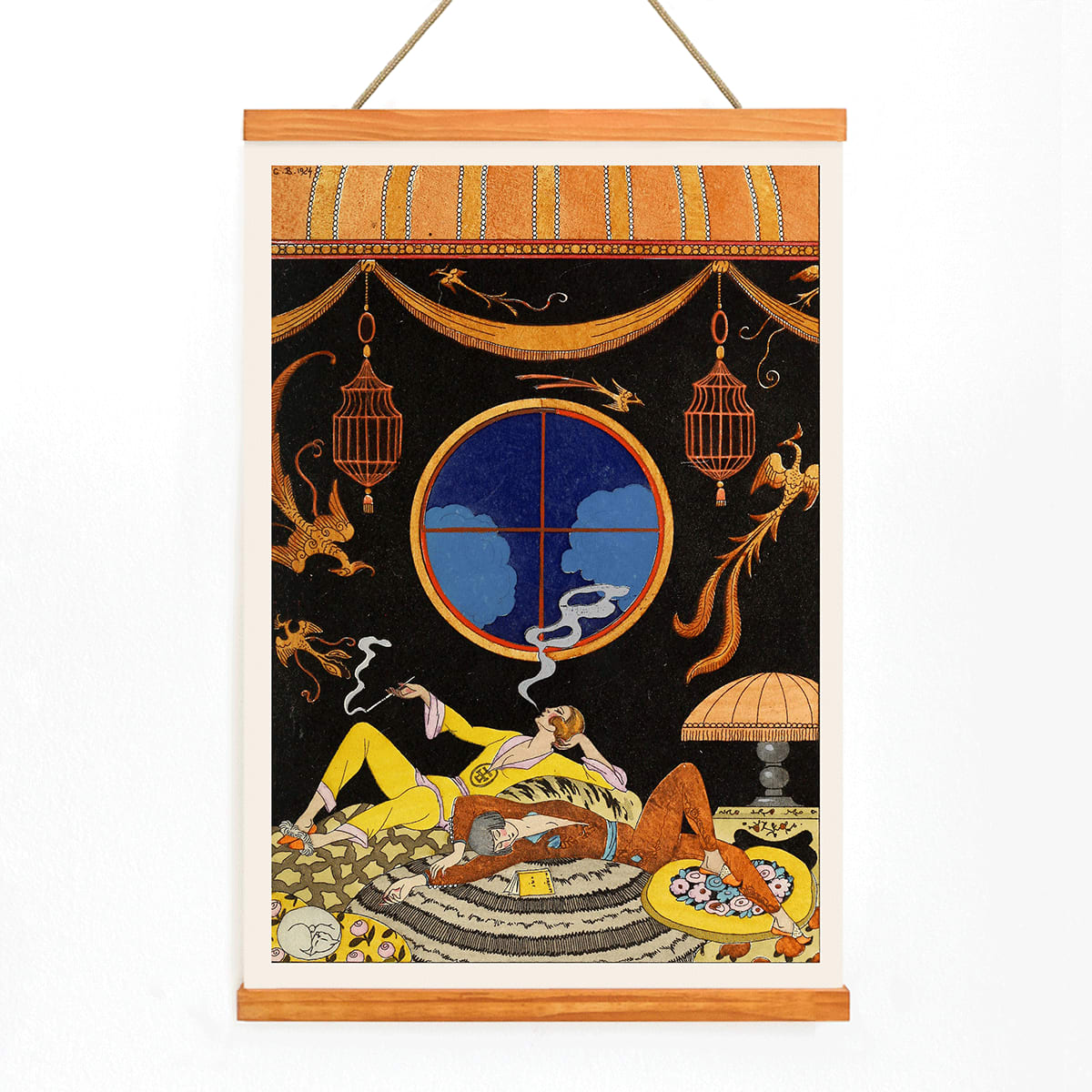
Falbalas et fanfreluches: La paresse gehört zu einer gefeierten Serie von Art-Déco-Modeplatten, die moderne Weiblichkeit und Alltagsszenen inszenieren. Für eine luxuriöse Jahresveröffentlichung geschaffen, stellt dieses Blatt das Motiv der Muße in den Mittelpunkt und reflektiert die 1920er-Jahre-Faszination für kultivierte Entspannung und gepflegte Lässigkeit. Das Werk richtete sich an ein anspruchsvolles Publikum und bietet einen Einblick in die raffinierte Welt des Pariser Stils sowie die sich wandelnden Rollen der Frau in dieser Epoche.
Als vintage Modeplatte von 1925 fängt es den Geist einer Zeit ein, in der Paris Mode und Wohnästhetik vorgab; dieses Erbe inspiriert bis heute klassische Wanddekoration und Kunstdrucke
Stil und Merkmale
Das Bild zeigt eine gelassene weibliche Figur, die elegant zurückgelehnt ist, ausgeführt mit Barbiers typischer Klarheit und Anmut. Die Komposition lebt von klaren schwarzen Konturen, geometrischen Formen und einer ausgewogenen Bildarchitektur. Dekorative Details deuten auf opulente Stoffe und sorgfältig arrangierte Szenerie hin, während die Gesamtstimmung eine stille Raffinesse vermittelt.
Die Pochoir-Technik ermöglicht kräftige, flächige Farbaufträge—tiefes Schwarz, warmes Ocker, intensives Blau und erdiges Braun—die durch subtile Orangeakzente ergänzt werden. Das Ergebnis ist eine harmonische, juwelenhafte Oberfläche, die Art Déco-Verfeinerung und dekorative Extravaganz vereint und das Blatt zu einem eindrucksvollen Kunstdruck macht
In der Raumgestaltung
Dieser Art-Déco-Kunstdruck verleiht Schlafzimmern, Ankleidebereichen oder ruhigen Leseecken eine elegante, beruhigende Atmosphäre und harmoniert besonders gut mit Messing, Samt oder lackierten Oberflächen. Sein gelassener Ausdruck und die grafische Klarheit setzen einen ruhigen Ton und passen ideal in Räume, die von einem Hauch vintage-Glamour profitieren.
Für ein stimmiges Ensemble kombinieren Sie ihn mit Mitternachtsblau-Akzenten, ockerfarbenen Keramiken oder Nussbaumholz, sodass die klaren Umrisse des Werkes zur Geltung kommen. In einem schlanken Rahmen eingebracht, bildet es einen eleganten Anker in einer Galeriewand mit Mode- und Illustrationsmotiven, besonders in Kombination mit vertikalen Posterformaten und sorgfältig ausgewählten Rahmen